
SCA Club Standards: The Modern Evolution of the Army 300 Club
SCA Club Standards: The Modern Evolution of the Army 300 Club
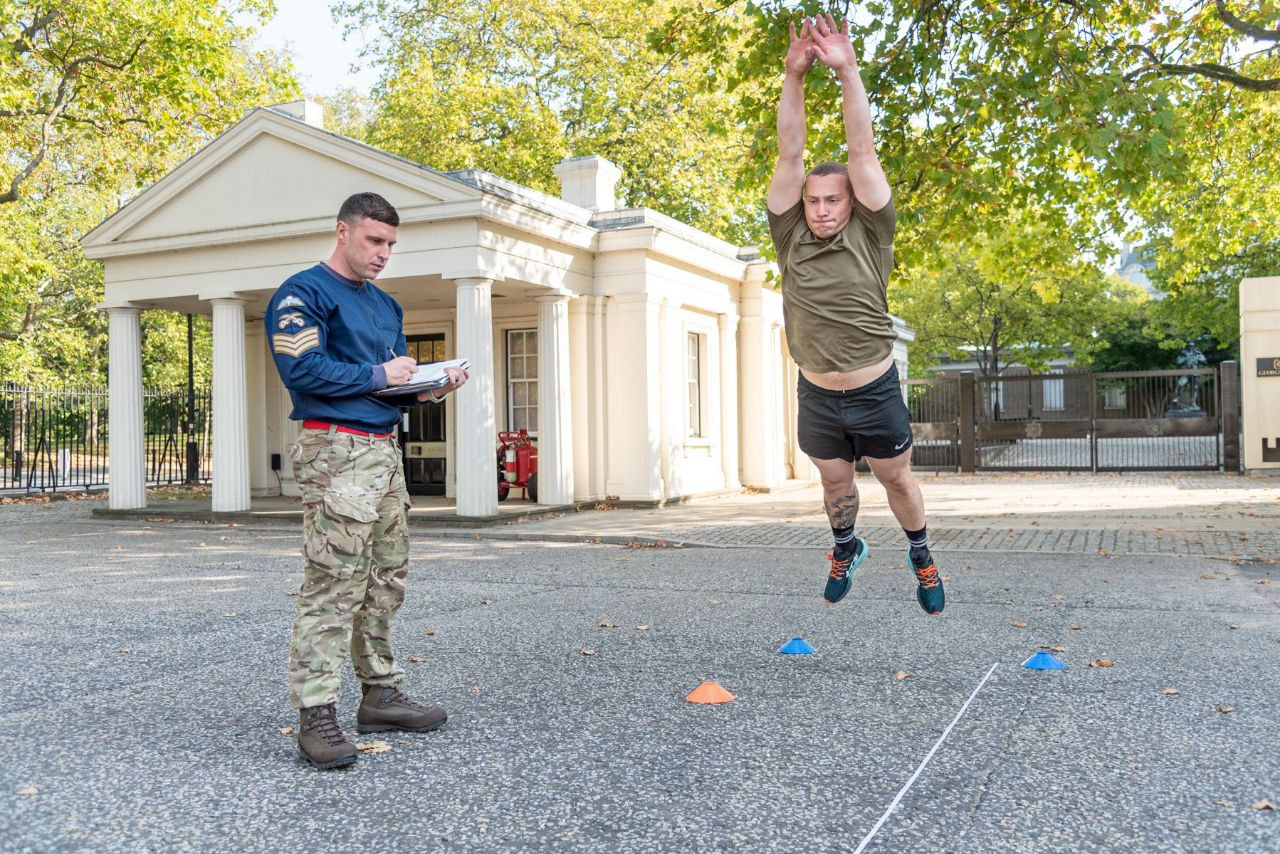
The SCA Club is an extended performance plan that’s built around the Soldier Conditioning Assessment. It serves as the modern equivalent of the old Army PFA “300 Club,” but with a structure that reflects current operational demands and not outdated endurance testing.
Instead of focusing on repetition-based scoring, the SCA Club evaluates performance across four core physical qualities:
Aerobic capacity.
Maximal strength.
Muscular endurance.
Relative strength.
Performance is grouped into four tiers: Bronze, Silver, Gold, and SCA 100 Club. The 100 Club represents elite performance across all four events.
This aligns with the broader direction of British Army fitness standards, which now emphasise capability under load and real-world physical output.
300 Club to the SCA Club
The old 300 Club rewarded maximum scores in push-ups, sit-ups, and a run. It created a clear target. However, it lacked depth. Strength was not assessed, and pulling ability was completely ignored.
The SCA Club replaces this model with a system that meets modern military demands. Soldiers are now expected to demonstrate:
- The ability to lift heavy loads.
- The ability to move efficiently under fatigue.
- The ability to control their bodyweight.
Military performance studies show that load carriage and operational tasks depend on both aerobic capacity and maximal strength (not endurance alone). Combined strength and endurance training has been shown to improve lifting, carrying, and movement performance.
The Four SCA Events in a Nutshell
The SCA Club is built around four events. Each of these events targets a different component of physical performance. Together, they create a balanced profile that is far more representative of real-world demands.
Let’s break down these events:
The 2 km run measures aerobic capacity and pacing under fatigue. It reflects high-intensity effort and remains a core benchmark within Army fitness testing.
The deadlift provides a direct measure of maximal strength. It reflects posterior chain capacity, which is essential for lifting, carrying, and injury prevention.
Press-ups measure upper-body muscular endurance. Although these exercises are still relevant, they now form just one part of a bigger system.
Pull-ups assess relative strength and body control. This is one of the most important additions. It’s a reflection of real-world tasks such as climbing and obstacle negotiation.
SCA Club Standards
The standards shown in the SCA Club tables highlight how demanding this system is across all categories.
For males under 30, the approximate benchmarks are:
- 100 Club: 7:31 run, 144 kg deadlift, 52 press-ups, 11.5 pull-ups.
- Gold: 7:54 run, 124 kg deadlift, 45 press-ups, 9.5 pull-ups.
- Silver: 8:15 run, 110 kg deadlift, 40 press-ups, 7.5 pull-ups.
- Bronze: 8:43 run, 106 kg deadlift, 35 press-ups, 5.5 pull-ups.
For females under 30, the approximate benchmarks are:
- 100 Club: 8:30 run, 110 kg deadlift, 35 press-ups, 5 pull-ups.
- Gold: 9:15 run, 92 kg deadlift, 32 press-ups, 3 pull-ups.
- Silver: 9:40 run, 88 kg deadlift, 28 press-ups, 1.5 pull-ups.
- Bronze: 10:10 run, 80 kg deadlift, 21 press-ups, 1 pull-up.
These standards scale across age groups (30–39, 40–49, and 50+). The goal is to maintain difficulty but still account for physiological differences.
Why the SCA Club is Important
The SCA Club improves how fitness is measured, trained, and understood in military settings.
From a practical standpoint, soldiers must be able to:
Carry loads of up to 50 kg.
Move efficiently over distance.
Lift and transport equipment or casualties.
These demands are highlighted within official Army guidance and explain why strength now sits alongside endurance as a core requirement.
The SCA Club also supports better long-term development. Encouraging strength training alongside endurance work reduces the risk of overuse injuries that come from repetitive, endurance-only training.
The National Strength and Conditioning Association has also highlighted the importance of strength, fatigue resistance, and load carriage ability in tactical populations.
How to Train for the SCA Club
Training for the SCA Club requires good planning that integrates all four components rather than isolating them.
A strong foundation should include:
- Progressive deadlift training to build maximal strength.
- Consistent pull-ups to improve relative strength.
- Interval-based running to improve 2 km performance.
- Regular press-up volume to maintain endurance capacity.
As fitness improves, sessions should become more integrated. The combination of strength work with running under fatigue is excellent to prepare for the demands of the assessment itself.
This is where structured programming becomes critical. Athletes who want to prepare for SCA standards can benefit from customised coaching, such as the services available through The Tactical Athlete coaching platform.
For those at an earlier stage, preparation should focus on building a base level of fitness before you target higher categories. More information on this can be found in The Tactical Athlete’s Army preparation resources.
Common Mistakes When Preparing for SCA Club
Despite the organisation of the SCA Club, numerous errors still limit performance.
These include:
- Over-prioritising running while neglecting strength.
- Ignoring pull-ups until late in preparation.
- Training each event in isolation rather than combining them.
These mistakes prevent progression beyond mid-level categories such as Silver or Gold.
Who the SCA Club Is For
The SCA Club is relevant across multiple groups. It provides a benchmark for:
- Military candidates preparing for selection.
- Serving personnel who want to improve performance.
- Police and fire service applicants.
- Hybrid and tactical athletes.
Its scoring system makes it easy to track progress and maintain a clear performance target.
Takeaway Message
The SCA Club represents a fundamental shift in how military fitness is measured. It replaces a narrow endurance model with a system that rewards strength, endurance, and control equally.
Achieving SCA 100 Club status requires consistent performance across all four events. This requirement alone makes it far more demanding than the old 300 Club, but also far more meaningful.
If you have any questions about SCA Club standards, please feel free to contact us.